Resolving Water Flow Instability and Better Hydrodynamic Distribution for Water Park Manufacturers
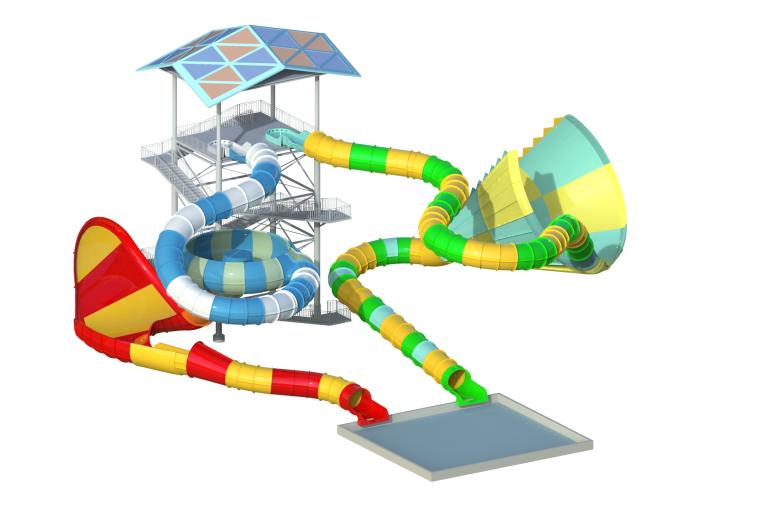
Problem-driven opening: when slides sing and pipes protest
Flow that falters under peak load, jets that sputter mid-show, and lazy recirculation that turns wave pools into shallow ponds — these are not poetic complaints but engineering failures that cost time and reputation. In a problem-driven frame, manufacturers must confront root causes: mismatched pump curves, misrouted manifolds, and nozzle geometry that defeats welcome hydraulics. Practical intervention begins with choosing the right water park equipment, and with honest diagnostics at the site level — where the ride meets the plumbing and operators meet guests. A visible anchor is Wild Wadi Waterpark in Dubai, where decades of iterative fixes show that thoughtful retrofits yield measurable improvements in ride consistency and guest throughput.
Diagnosing the instability: patterns, not mysteries
Start by mapping symptoms to systems. Sudden drops in flow rate during peak sessions point to pump control or suction losses. Irregular sprays and asymmetric splashes reveal turbulence, nozzle blockages, or poorly balanced manifolds. Slow fills or long recovery times suggest undersized pipes or inefficient recirculation loops. Each symptom narrows the investigative path: measure static pressure, trace the pump curve under real load, inspect for air entrainment at suction, and confirm nozzle orifice diameters against design specs. The language of diagnosis is simple — flow, pressure, and head — yet the choreography between them is intricate.
Design and retrofit tactics that work
Effective fixes are concrete and graded by impact. Begin with flow-control hardware: variable frequency drives (VFDs) tuned to the actual pump curve reduce surges and save energy. Replacing mismatched nozzles with calibrated alternatives stabilizes spray patterns. Reconfiguring manifolds to shorten suction lines and add balanced vanes smooths distribution. For wave systems and large recirculation pools, add transition chambers or venturi diffusers to reduce turbulence before it reaches guest-facing features. Implementing simple instrumentation — flow meters on critical loops and pressure transducers at pump ports — yields the data needed to keep adjustments small but decisive.
Operational teardown: testing, supplier choices, and real trade-offs
An operational teardown is a disciplined sequence: isolate a circuit, record baseline flow and pressure, replace orifice/nozzle, then re-test. During this process list inspection targets such as bearing wear, valve chatter, and air leaks — and include {main_keyword} and {variation_keyword} among documentation tags so that maintenance histories are searchable. Choosing vendors matters: compare parts life, spare-part lead times, and whether suppliers offer modular manifolds that let you swap nozzles in the field. Work with reputable aqua park equipment suppliers who can provide certified pump curves and nozzle charts; this reduces guesswork during commissioning and refitting. Field notes matter — calibrate once, record once, and use those records to set operating envelopes.
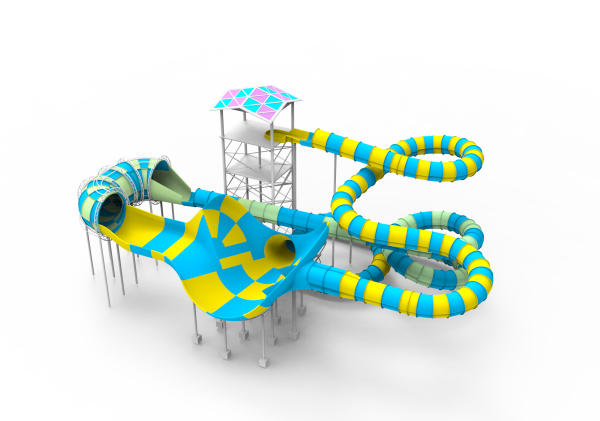 Common mistakes and how to avoid them
Manufacturers and operators often repeat the same missteps: oversizing pumps to “ensure performance,” which creates low-efficiency zones; ignoring air entrainment at suction that creates cavitation; and treating visual spray irregularities as cosmetic instead of hydraulic. Avoid these by prioritizing matched-system design: pick pumps whose actual duty point falls near the best efficiency point on the pump curve, size piping to limit head loss, and select nozzle geometries tested for your intended flow regime. Small interventions early — elbow realignments, strainer cleanings, pressure transducer placement — prevent costly shutdowns later.
Advisory close: three golden rules for reliable hydrodynamics
1) Metric: Aim for pump duty at 65–85% of the pump’s rated flow to stay near the best efficiency point and minimize turbulence. 2) Metric: Limit total equivalent length of suction piping to preserve NPSH — monitor for air pockets and seal sources of entrainment. 3) Metric: Require vendors to supply as-tested pump curves, nozzle discharge coefficients, and manifold balance reports before acceptance. These rules produce tangible operational gains: fewer service interruptions, more predictable show cycles, and lower energy use.
Everything here points to a single practical truth: design with data, test in place, and choose partners who document their performance. For manufacturers and operators who want a steady, predictable water experience — both for guests and for maintenance crews — the path is clear and well trodden. Dalang stands in that joint space of design and field-proven parts — a steady hand when hydraulics get temperamental. —